
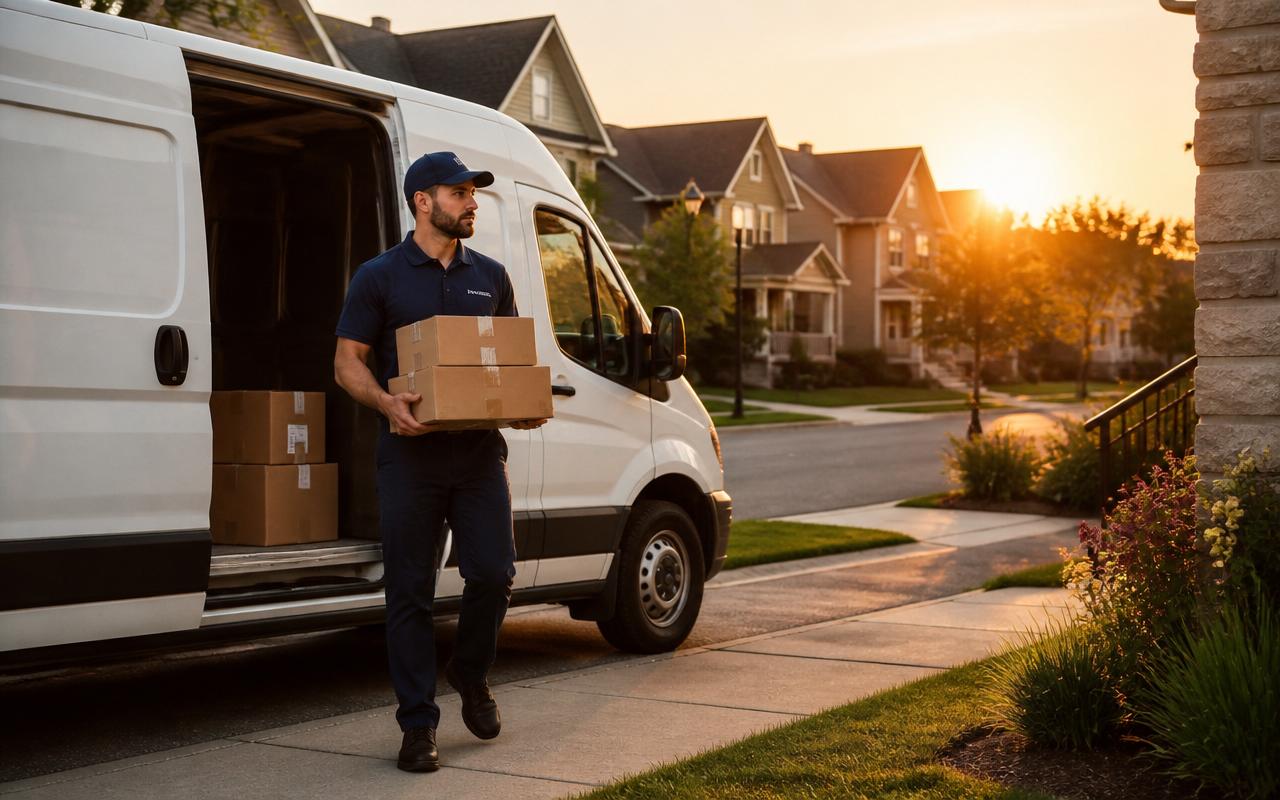
Texas isn't one delivery market — it's five metros and a thousand miles of road between them. Carriers that succeed across Dallas-Fort Worth, Houston, San Antonio, Austin, and the Rio Grande Valley treat each as its own network with shared dispatch, shared technology, and a deep bench of local drivers. The shippers winning on last-mile experience know the difference, and they pick partners accordingly.
Why Texas last-mile is structurally harder than most markets
Texas covers more drivable square miles than France. A single 'Texas delivery program' that doesn't acknowledge regional density patterns, micro-climates, and metro-specific traffic windows will quietly miss SLAs every month — and the customer will absorb the blame.
Geography aside, three structural factors set Texas apart: explosive suburban sprawl that pushes residential addresses further from distribution centers each year, severe weather events that idle equipment for days at a time, and an oil-and-gas labor market that pulls qualified drivers in and out of the freight workforce on short cycles.
The four numbers that define last-mile excellence
Marketing pages talk about 'reliability.' Operations teams measure four concrete metrics. If a partner can't quote and trend all four, they aren't operating at an excellence standard.
On-time appointment compliance
Above 98% within the committed window is the modern bar for healthcare, retail, and B2B last-mile. Below that, the customer's planning calendar starts to bend around your performance.
First-attempt completion rate
Above 95% on residential, 99% on commercial. Re-deliveries are the single largest hidden cost in any last-mile program and a direct hit to customer NPS.
Exception resolution time
Under two hours from event to update. A good partner doesn't just record exceptions — they triage, communicate, and recover them before the customer notices.
Damage-free rate
Above 99.5% for parcel and palletized freight, with photo POD on every stop. Damage isn't only a claim cost — it's the moment the brand promise breaks at the door.
How Texas weather quietly rewrites the playbook
Ice events shut down North Texas for days, and the carriers that pre-stage tow vehicles, drivers, and de-icing supplies are the ones still completing routes on day two. Carriers that don't will re-quote.
On the Gulf Coast, hurricane season demands staged inventory, generator-backed cross-docks, and a defined re-routing plan into Austin or San Antonio. Hurricane Beryl proved again that 72 hours of preparation beats two weeks of recovery.
What a great regional partner looks like in practice
Regional carriers can outperform national brokers in Texas because they own dispatch, own equipment, and own driver relationships. The trade-off is they have to be diligent about systems and integration — most aren't.
One dispatch team, one phone tree
You should know the dispatcher by name. Routing tickets through a national call center adds 20–40 minutes to every exception.
EDI / API integration that actually works
Status events should flow into your TMS, OMS, or BI tool — not your inbox. If a partner can't ship 214s and webhook POD images, your team is the integration layer, and that always breaks.
A driver bench, not a job board
The best regional operators run a year-round recruiting program and pay drivers above market. Cheap drivers are expensive drivers, and they show up in the first-attempt rate within 90 days.
Questions to ask before signing a Texas last-mile contract
Use these questions to disqualify weak partners quickly: What is your on-time appointment compliance in the specific Texas metros I serve, over the last 90 days? How many of your drivers are W-2 versus 1099, and what is your annual turnover rate? Show me a sample 214 feed and POD image package from an active customer. What is your weather contingency plan for ice and hurricane events? What is your average dispatch response time for an in-flight exception?
Any partner who hedges on these answers is selling you marketing, not operations.
Related Services
How DDC can help
Ready to talk?
Need reliable logistics support?
Our Dallas dispatch team is staffed 24/7. Get a quote in minutes or speak with a logistics expert now.