
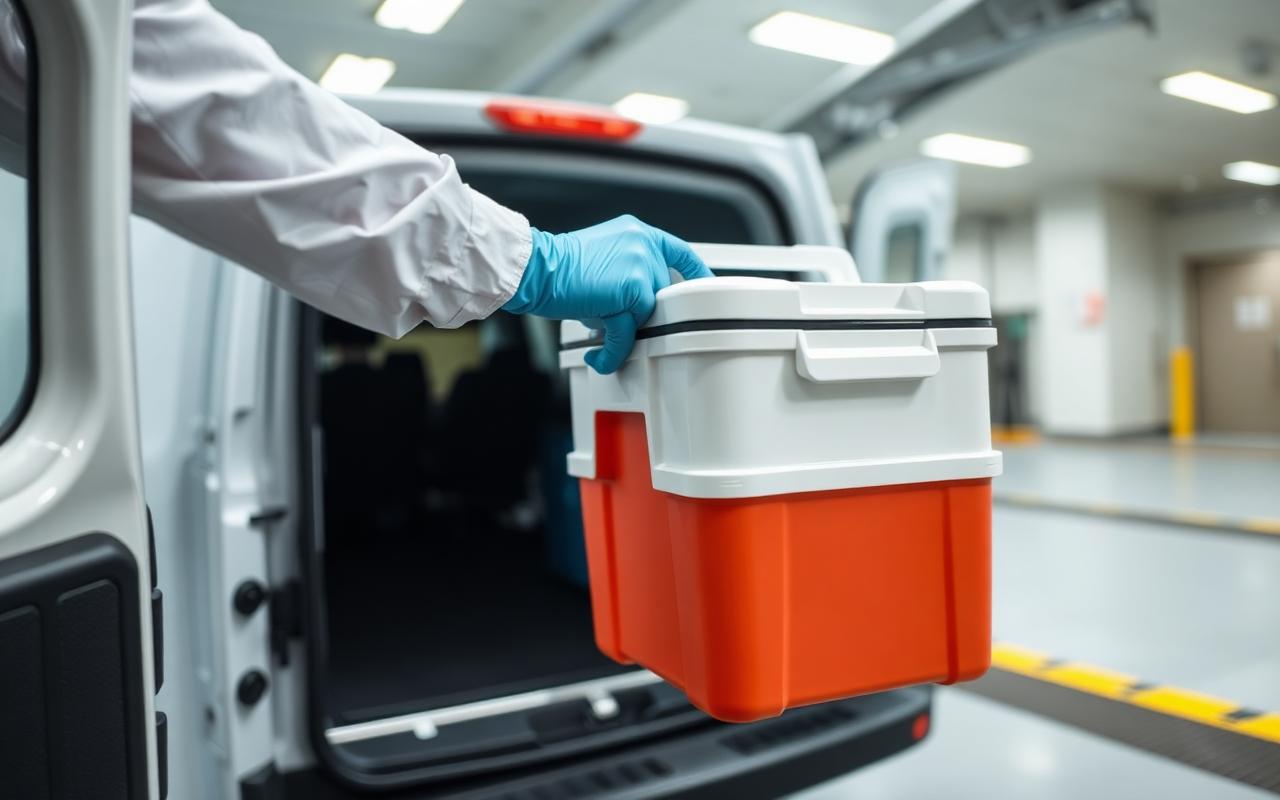
Chain-of-custody used to mean a clipboard, a signature, and a fax. In 2026, healthcare logistics teams expect digital handoffs, real-time temperature data, and exception alerts before a specimen ever reaches the receiving lab. The challenge is doing all of that without slowing down the nurse, the phlebotomist, or the courier on a 40-stop route. The carriers that solve both win the long-term programs.
Why chain-of-custody is changing fast
Two pressures are reshaping medical courier work: regulatory expectations around HIPAA, CLIA, and DOT 49 CFR for diagnostic specimens; and operational pressure from labs and hospitals running leaner staffing models that can't absorb manual reconciliation work.
The result is a clear separation between couriers that ship paper manifests and couriers that ship structured data. The latter wins every renewal.
What modern chain-of-custody looks like end to end
A complete digital chain-of-custody captures five datapoints per specimen, automatically, with no extra steps for the clinical staff.
Verified pickup
Barcode or RFID scan at origin, GPS-stamped, with photo confirmation of packaging integrity. No barcode, no pickup.
Continuous environmental data
For temperature-controlled specimens, in-package data loggers stream readings to a cloud dashboard. Excursions trigger an alert to dispatch before the package arrives at the lab.
In-transit visibility
Live GPS on the vehicle, ETA recalculated continuously. The lab knows when to staff the receiving window without calling for status.
Verified handoff
Scan-on-arrival, e-signature from the receiving tech, photo POD. The full event chain is timestamped and immutable.
Auditable record
A single PDF or API feed delivers the full chain to the customer for QA, accreditation, or litigation hold within seconds.
Temperature-controlled work demands more rigor
Blood products, biopsies, and pharmacy compounds carry tight temperature tolerances. A good partner doesn't just promise 2–8°C — they prove it with qualified packaging, documented pack-out procedures, and a written excursion protocol.
Insist on packaging qualification data (PQ summaries are standard from any serious medical courier), pre-conditioned coolants, and route times validated against worst-case ambient conditions for your service area. In Dallas in August, that matters.
Compliance is non-negotiable — and rarely advertised honestly
Ask any medical courier for these documents before signing: a HIPAA business associate agreement, evidence of HIPAA training within the last 12 months for every driver on your account, DOT hazmat training for any driver handling Category A or B infectious substances, and a documented bloodborne pathogen exposure control plan. The carriers that produce these in a day are operating to standard. The ones that can't, aren't.
Reducing friction for the clinical team
The biggest customer-experience win in medical logistics is making the courier invisible to the clinical workflow. That looks like: scheduled routes the floor can plan around, on-demand stat pickups dispatched in under 20 minutes, drivers trained on facility-specific access procedures (no badge calls every visit), and a single dispatcher who knows the facility by name.
When the courier is invisible, the nurses stop asking about logistics and start asking about expansion.
Related Services
How DDC can help
Ready to talk?
Need reliable logistics support?
Our Dallas dispatch team is staffed 24/7. Get a quote in minutes or speak with a logistics expert now.