
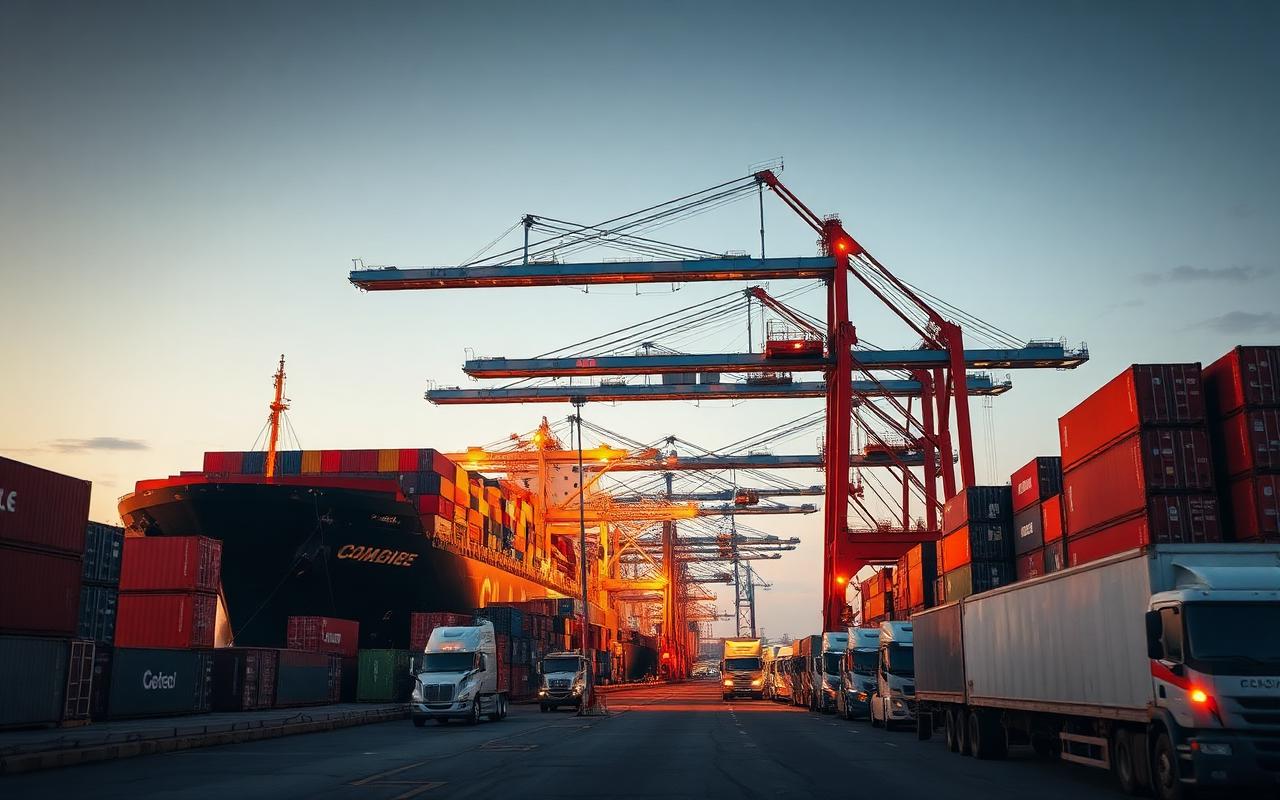
The Southern U.S. supply chain operates on a triangle: Gulf Coast ports for inbound ocean freight, DFW as the inland distribution hub, and Memphis as the air-and-truck consolidation point for parcel and expedited freight. Designing for resilience means engineering redundancy across all three corners — and treating visibility as infrastructure, not a dashboard nice-to-have.
The Southern triangle: Gulf ports, DFW, Memphis
Houston and New Orleans handle the majority of inbound ocean container volume for the South, with Mobile and Gulfport providing surge capacity. DFW absorbs the inland flow and redistributes north and west. Memphis anchors the air-cargo and parcel network through FedEx's superhub and a dense regional trucking ecosystem.
Supply chains that anchor on only one corner of this triangle break in predictable ways. Resilient designs spread inbound, inland, and outbound capacity across all three.
Designing for disruption, not just efficiency
Five years of port congestion, hurricane events, and labor disruption have changed how supply-chain leaders evaluate networks. Lowest-cost lane structures are no longer winning RFPs; resilience-adjusted costs are. That requires building in deliberate redundancy.
Redundant carriers per lane
Two carriers per critical lane, with active volume on both — not a primary and a paper backup. Inactive backups don't perform when called on.
Multi-port inbound strategy
Even if Houston is 80% of inbound, an active 20% through New Orleans or Mobile keeps the network alive during port disruptions.
Cross-dock per metro
At least one cross-dock partner in every metro you serve. Cross-docks turn a 4-day lane into a 1-day lane during recovery and absorb spike volume in week-1 peak.
Visibility belongs in your systems, not your inbox
Track-and-trace as email is dead. Modern supply-chain visibility means structured event data flowing into your TMS or BI platform from every leg of every move — port, drayage, OTR, cross-dock, and final-mile.
Insist on EDI 214 or webhook events from every partner. The carriers that can't ship structured events should be replaced by carriers that can; the integration cost is trivial compared to the operational cost of running a network blind.
The role of regional carriers in a resilient network
National carriers are excellent at long-haul, but the last 200 miles of every move is regional. Building a bench of three to five regional carriers across the South — each strong in their own metros — outperforms a single national contract on speed, exception recovery, and cost during disruption windows.
Pair regional capacity with a single regional warehousing partner who owns cross-dock space in multiple metros and you've built a network that absorbs disruption rather than transmitting it to your customer.
Metrics that prove the network is working
Five metrics tell you whether the design is paying off: inbound-to-outbound dwell time at each cross-dock, on-time delivery by metro (not network-wide), exception-recovery time, lane-level cost variance month over month, and customer-reported issue rate per 1,000 deliveries. Network-wide averages hide the metros that are quietly failing.
Related Services
How DDC can help
Ready to talk?
Need reliable logistics support?
Our Dallas dispatch team is staffed 24/7. Get a quote in minutes or speak with a logistics expert now.